The Temple of Karnak lies about 3 km north of Luxor. Rather than a single temple, Karnak is a vast complex of temples, pylons, chapels and other structures built and enlarged over many centuries.
One of its most impressive features is the Great Hypostyle Hall, with its 134 massive columns covering an area of almost 5,000 square metres.
Karnak is one of the largest religious complexes ever built and one of the highlights of any visit to Luxor.
Entrance fee for foreign visitors: EGP 600 per adult / EGP 300 per student. The ticket includes access to Karnak Temple and the Open Air Museum.
Luxor Temple stands in the heart of the modern city, close to the Nile. Much of the temple was built by Amenhotep III, with later additions by Tutankhamun, Horemheb and Ramesses II.
Unlike Karnak, Luxor Temple was not primarily dedicated to a single god. It played an important role in the annual Opet Festival, during which the sacred images of Amun, Mut and Khonsu were carried from Karnak to Luxor.
At the entrance, the great pylon of Ramesses II is still fronted by one of the original obelisks. Its twin has stood on the Place de la Concorde in Paris since 1836.
Entrance fee for foreign visitors: EGP 500 per adult / EGP 250 per student.

The Valley of the Kings lies on the West Bank of the Nile, opposite Luxor. During the New Kingdom, it became the principal burial place for Egypt’s pharaohs and other members of the royal family.
More than sixty tombs have been discovered here, together with around twenty unfinished structures. Some are relatively simple, while others descend deep into the rock and are decorated with remarkably well-preserved scenes from ancient Egyptian funerary texts.
A standard entrance ticket gives access to a selection of open tombs. Some of the most famous tombs, including those of Tutankhamun, Seti I and Ramesses VI, require separate tickets.
Entrance fee for foreign visitors: EGP 750 per adult / EGP 375 per student. Separate tickets apply for certain special tombs.

The Temple of Hatshepsut at Deir el-Bahari is one of the most distinctive monuments on Luxor’s West Bank. Built against the dramatic limestone cliffs, the temple was designed as a series of terraces connected by broad ramps.
Hatshepsut ruled during the 18th Dynasty and became one of ancient Egypt’s most successful pharaohs. Her temple commemorated both her reign and her divine relationship with the god Amun.
Among the most interesting scenes are those depicting her famous expedition to the Land of Punt, as well as reliefs connected with her divine birth.

The Tomb of Queen Nefertari, wife of Ramesses II, is one of the most beautifully decorated tombs on Luxor’s West Bank.
Located in the Valley of the Queens, the tomb is famous for the exceptional quality and preservation of its wall paintings. The scenes show Nefertari’s journey through the afterlife and are among the finest surviving examples of New Kingdom tomb decoration.
Because of the tomb’s fragile condition, access has often been restricted and visitor arrangements can change. When open for visits, photography is strictly forbidden.
Entrance: Access conditions and any supplementary tickets should be checked shortly before your visit, as availability is subject to change.
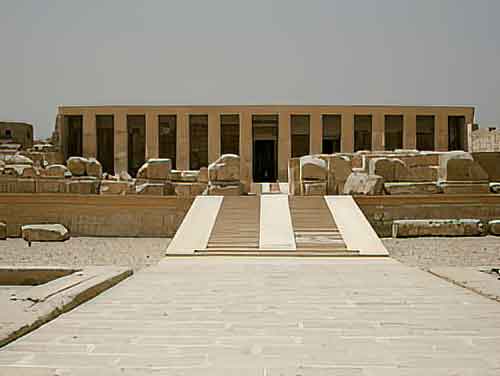
The Temple of Seti I at Abydos is one of the finest surviving temples of ancient Egypt. Seti I began its construction during the 19th Dynasty, and the decoration was later completed by his son Ramesses II and grandson Merneptah.
The temple is especially famous for its seven sanctuaries, dedicated to Osiris, Isis, Horus, Amun-Ra, Ra-Horakhty, Ptah and Seti I himself. It also contains the celebrated Abydos King List, one of the most important surviving records of ancient Egyptian rulers.
The reliefs are exceptionally fine, with some of the best-preserved colours and carving from the New Kingdom.
Entrance fee for foreign visitors: EGP 260 per adult / EGP 130 per student.

The Temple of Edfu is one of the best-preserved temples in Egypt. Built during the Ptolemaic Period, it was dedicated to Horus, the falcon-headed god, together with Hathor and their son Harsomtus.
Construction began under Ptolemy III in 237 BC and was completed almost 180 years later under Ptolemy XII. Because much of the temple remained buried beneath layers of settlement debris for centuries, its architecture and reliefs survived in remarkably good condition.
The monumental pylons, large courtyard, hypostyle halls and sanctuary give an excellent impression of how a major ancient Egyptian temple functioned.
Entrance fee for foreign visitors: EGP 550 per adult / EGP 275 per student.

Luxor and its surroundings are not only rich in Pharaonic monuments. The region also has an important Coptic Christian heritage, with churches and monasteries that reflect a very different chapter of Egyptian history.
Christian communities have lived in Upper Egypt for centuries, and several churches and monasteries were established on or near much older sacred sites. Some remain active places of worship today.
A visit to one of these sites offers a quieter and more personal view of Egypt, away from the major archaeological attractions, and gives an insight into the country’s long Christian tradition.
Entrance: Most churches and monasteries do not charge a standard tourist entrance fee, although access may depend on religious services, opening times or local arrangements.

The tomb of Tutankhamun is one of the most famous archaeological discoveries in history. It was found by Howard Carter in 1922 in the Valley of the Kings, remarkably intact compared with many other royal tombs.
Tutankhamun ruled during the 18th Dynasty and died at a young age. His tomb is relatively small, but the thousands of objects discovered inside — including the famous gold funerary mask — transformed him into the best-known pharaoh in the world.
Most of the original treasures are no longer in the tomb, but visiting the burial chamber remains a special experience and allows you to see the place where this extraordinary discovery was made.
Supplementary entrance fee for foreign visitors: EGP 700 per adult / EGP 350 per student, in addition to the standard Valley of the Kings ticket.

The Temple of Medinet Habu is one of the most impressive and best-preserved monuments on Luxor’s West Bank. It was built by Ramesses III as his mortuary temple and is surrounded by massive defensive walls.
The temple is especially famous for its detailed reliefs depicting Ramesses III’s military campaigns, including battles against the Sea Peoples. Many of the original colours are still visible, making Medinet Habu particularly rewarding to explore.
Because it is often quieter than some of Luxor’s better-known sites, Medinet Habu is also one of the most enjoyable temples to visit at a relaxed pace.
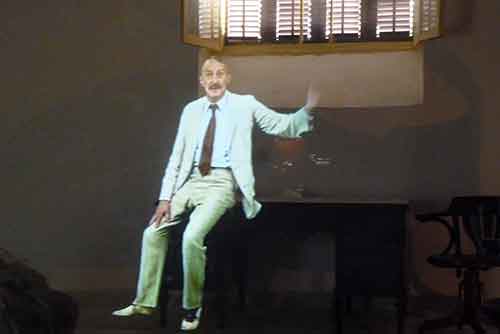
Howard Carter built his house on Luxor’s West Bank in 1910, close to the archaeological sites where he was working. It remained his base in Luxor until his death in 1939.
Carter was living here when he and his team discovered the tomb of Tutankhamun in 1922. The house was simple and practical, with bedrooms, work areas and a photographic darkroom.
Today, the house is a small museum that offers an interesting glimpse into Carter’s life and work. The interior has been carefully restored, and historical displays explain the circumstances surrounding the discovery of Tutankhamun’s tomb. A full-scale replica of the tomb can also be visited in the grounds.
Entrance fee for foreign visitors: EGP 220 per adult / EGP 110 per student.

Deir el-Medina was the home of the craftsmen, artists and labourers who built and decorated the royal tombs in the Valley of the Kings and the Valley of the Queens.
The settlement offers a rare glimpse into everyday life in ancient Egypt. Unlike the grand temples and royal tombs, Deir el-Medina shows us how ordinary but highly skilled people lived, worked, worshipped and raised their families.
Several beautifully decorated tombs belonging to the workers can also be visited. Their scenes are more personal than those found in royal tombs and give a fascinating insight into private beliefs about death and the afterlife.
Entrance fee for foreign visitors: EGP 220 per adult / EGP 110 per student. Separate tickets apply to certain individual tombs, such as the Tomb of Pashedu.

Luxor Museum is one of Egypt’s most rewarding museums and an excellent complement to the temples and tombs around the city.
Opened in 1975, the museum houses a carefully selected collection of objects discovered in and around Luxor. Highlights include statues from the New Kingdom, royal mummies and artefacts from the tomb of Tutankhamun.
Unlike the much larger museums in Cairo, Luxor Museum is compact and easy to visit. The displays are well organised, making it a particularly good place to understand the history of ancient Thebes without feeling overwhelmed.
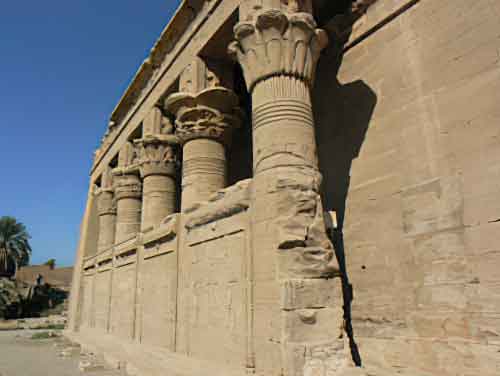
The Temple of Dendera, dedicated to the goddess Hathor, is one of the best-preserved temple complexes in Egypt. Most of the present structure dates from the Ptolemaic and Roman periods, although the site itself was sacred much earlier.
The temple is famous for its richly decorated columns, astronomical ceiling scenes and underground crypts. Visitors can also climb to the roof, where processional scenes and further astronomical reliefs can be seen.
One of the most interesting reliefs appears on the rear exterior wall of the temple. It shows Cleopatra VII together with her son Caesarion, linking Dendera directly with the final years of Ptolemaic rule in Egypt.
Entrance fee for foreign visitors: EGP 300 per adult / EGP 150 per student. Additional tickets currently apply for the temple panorama and the crypts.

The Temple of Kom Ombo stands on a bend of the Nile and is unusual because it was dedicated to two gods: Sobek, the crocodile god, and Harwer, or Horus the Elder.
This double dedication is reflected in the temple’s design, with two parallel entrances, halls and sanctuaries. Much of the present structure dates from the Ptolemaic and Roman periods.
One of the most interesting reliefs shows what are believed to be ancient surgical instruments. The nearby Crocodile Museum also displays mummified crocodiles found during excavations in the area.
Entrance fee for foreign visitors: EGP 450 per adult / EGP 225 per student. The ticket includes both the Temple of Kom Ombo and the Crocodile Museum.

The Ramesseum is the mortuary temple of Ramesses II and one of the most important monuments on Luxor’s West Bank.
Built during the 19th Dynasty, the temple was dedicated to Amun and to the deified pharaoh himself. Much of the complex is now in ruins, but its surviving columns, reliefs and monumental statues still give a strong impression of its original scale.
One of the most striking remains is the fallen colossal statue of Ramesses II, which once stood more than 17 metres high. The site is also famous for its reliefs depicting military campaigns, including scenes from the Battle of Kadesh.